PIA Sold for Rs135B: Who Bought It & Economic Impact
Published on December 24, 2025
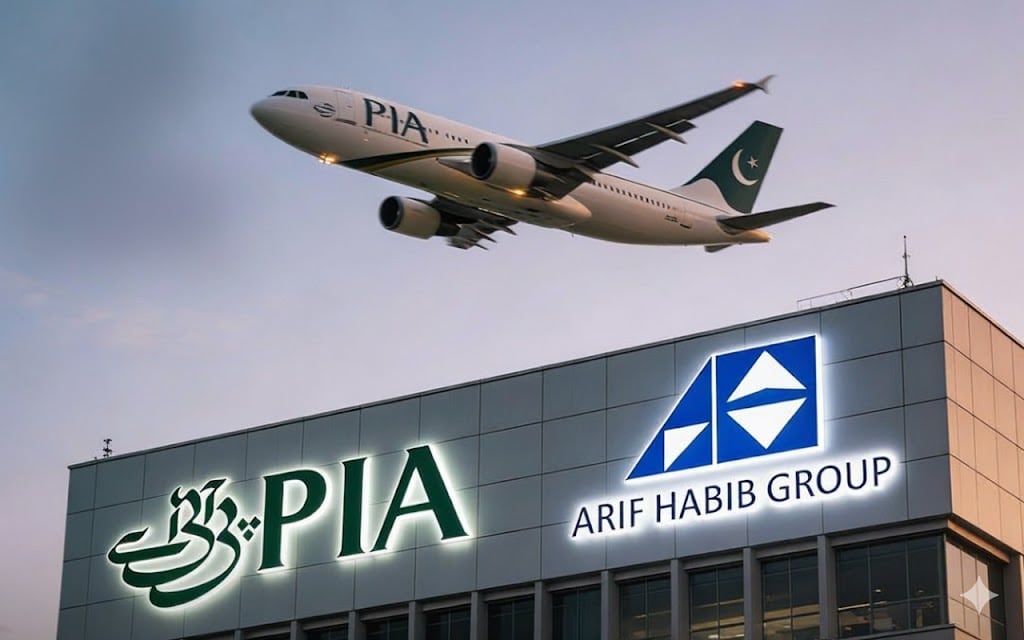
The Economic Impact of the aviation sector shifted today as PIA was sold for Rs135B in a landmark auction.
Pakistan’s privatization push delivered a headline-making result when Pakistan International Airlines (PIA) was sold in a transparent public auction for Rs135 billion. A consortium led by Arif Habib emerged as the highest bidder for a 75% controlling stake, outbidding a group associated with Lucky Cement. (dawn.com)
This transaction is more than a commercial sale: it reflects years of policy debates, fiscal pressures, and reform commitments tied to broader economic stability and restructuring goals.
For ongoing updates and context on this major economic transition, bookmark our continuous analysis at
Pakistan Economy & Privatization Coverage at AlKhalil Institute.
How the Auction Played Out
According to detailed reporting by Dawn, the bidding process began with a base price of Rs115 billion, which was based on the highest initial bid. Bidding increments were set at Rs250 million. The competition broadcast live on TV and government social media channels saw Lucky Cement raise its offer to Rs134 billion, only to be outpaced when Arif Habib’s consortium bid Rs135 billion, prompting Lucky Cement to step back. (dawn.com)
This transparent public auction is a first-of-its-kind approach in Pakistan’s efforts to privatize one of its most high-profile state-owned enterprises.
Internationally, Reuters confirmed these numbers and noted that this winning bid exceeded the government’s expectations, pointing to a competitive and disciplined process. (reuters.com)
Who Bought PIA: Arif Habib-Led Consortium Explained
One of the most common questions search engines show around this topic is “Who bought PIA?” The answer lies with a consortium headed by Arif Habib Corporation a publicly listed investment holding company with a diversified portfolio.
For a deeper understanding of institutional investors like Arif Habib Group their history, business philosophy, and relevance to Pakistan’s economic landscape visit About AlKhalil Institute.
Here are credible points you can state:
- Arif Habib Corporation is listed and active in multiple sectors, indicating institutional experience rather than speculative bidding.
- The group’s affiliated brokerage and investment banking arm, Arif Habib Limited, is one of Pakistan’s major market intermediaries and advisors.
- Past investments by the group show engagement in both financial markets and real-economy assets.
These elements do not guarantee turnaround success, but they support a narrative of strategic rather than opportunistic investment.
Buyer’s Commitments: Investment, Fleet Expansion, and Partnerships
After winning the bid, the consortium’s leadership emphasized that the privatization would “promote investment” into PIA. According to reporting in Dawn, the new owners plan to expand the airline’s fleet in phases initially to 38 aircraft, with a longer-term goal of up to 65 aircraft, dependent on demand and operational performance. (dawn.com)
They also expressed openness to discussions with foreign airlines and potential strategic partners during the post-approval period. These forward-looking commitments capital injection, operational expansion, and potential international collaborations are rare in discussions of SOE privatizations in Pakistan.
What International Media Is Saying
Globally, several respected outlets have framed the PIA sale not only as a privatization but also as part of Pakistan’s broader financial reform trajectory:
- Associated Press (AP) described the privatization as a key structural move linked to Pakistan’s IMF support program, pointing out the airline’s legacy challenges and the importance of external capital and governance. (apnews.com)
- Reuters summarized the timeline, noted expectations for the new owners to take operational control by April 2026, and highlighted the clear sale structure designed to unlock investment and reduce recurring losses. (reuters.com)
- Financial Times placed the privatization in the context of global privatization trends and structural reform debates, spotlighting execution risk as the real test of success. (ft.com)
This international framing is useful for positioning your analysis as globally contextualized a strong SEO signal for audiences researching Pakistan’s economy from abroad.
Balanced Perspective: Opportunity and Risk
Rather than adopting a purely optimistic or pessimistic tone, high-quality articles often frame complex developments in terms of conditional outcomes. Here’s a defensible, search-friendly perspective:
Opportunity
- Fiscal relief: Privatizing a loss-making flag carrier can reduce budget burdens if managed well.
- Capital infusion: Promised investments could modernize the fleet and expand route networks.
- Professional governance: Private ownership can introduce discipline and efficiency.
Risk
- Execution matters most: Capital promises must translate into operational upgrades, cost controls, and market competitiveness.
- Structural issues remain: High labor costs, legacy liabilities, and regulatory constraints will still need attention.
- Policy continuity: Long-term success depends on stable economic and aviation policy frameworks.
Economists quoted in related reporting describe the move as a significant milestone but emphasize that the real work begins after the sale closes. This nuanced framing avoids overclaiming while aligning with both local reporting and international economic analysis.